
June 24, 2026
How Local Cannabis Delivery Works
Learn how local cannabis delivery works, from age checks and payment to product selection, order timing, and what to expect at your door.
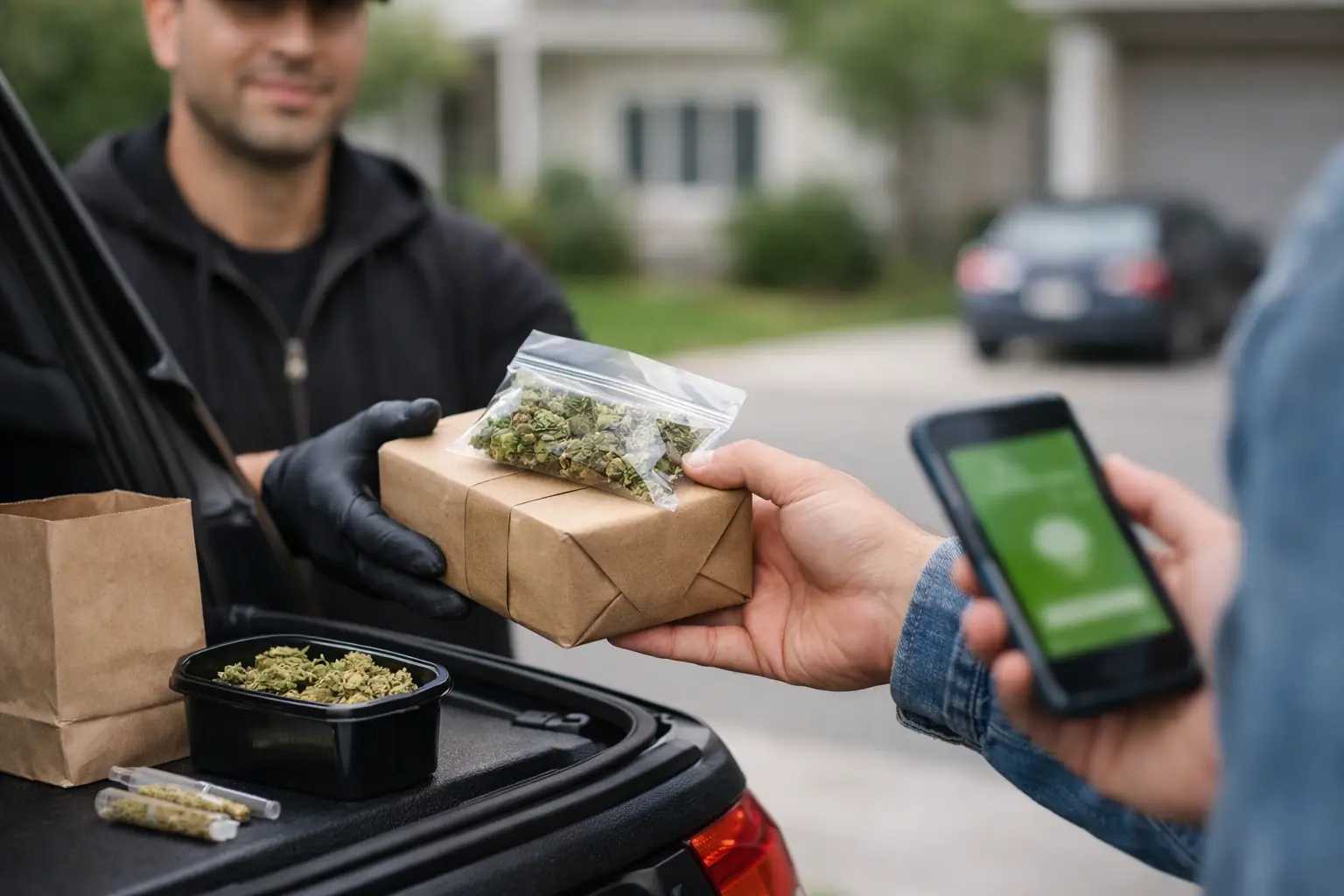
You place an order at 7:15, finish dinner, and a legal cannabis purchase shows up at your door later that evening. That convenience is exactly why people ask how local cannabis delivery works. The short answer is simple: you shop from a licensed retailer, verify your age, choose from products available in your area, place the order, and receive it through a compliant local delivery process.
What matters is everything happening behind that simple experience. Local cannabis delivery is not the same as food delivery, and it is not run like an unregulated marketplace. A legal retailer has to follow rules around age-restricted sales, inventory, service areas, and handoff procedures. For customers, that means a more structured process, but it also means you know what you are buying and who you are buying it from.
How local cannabis delivery works from start to finish
Most orders begin the same way. You choose a nearby licensed store, browse what is actually in stock, add products to your cart, and move through checkout. If delivery is available to your address, the system usually confirms that before you pay or finalize the order.
From there, the store reviews the order, prepares the items, and assigns the delivery based on local coverage and operating hours. Depending on the retailer, you may get a delivery window, an order status update, or a call if something needs to be confirmed. Once the driver arrives, the order is handed directly to the customer after age and identity checks.
That last step matters. Cannabis delivery is tied to adult-use compliance, so the order cannot just be left on a porch or dropped in a mailbox. Someone of legal age must be there to receive it.
Why delivery depends on your location
Local delivery is built around store-by-store coverage, not broad regional promises. A retailer may deliver in one part of town, have limited reach in another area, or only serve addresses within a set distance from a specific storefront. That is why location-based shopping is such a practical setup for cannabis retail.
For the customer, this affects two things: what products are available and how fast the order can arrive. Inventory often reflects the store fulfilling the order, not some warehouse serving an entire province or state. If one location has the flower or vapes you want and another does not, delivery availability may change with it.
This is also why nearby retail matters. A local model usually means clearer delivery boundaries, better stock accuracy, and fewer surprises at checkout. If you are ordering from a store that already serves your neighborhood, the process tends to be more predictable.
What you need before placing an order
You do not need much, but the basics are non-negotiable. You need to be of legal age, provide a valid delivery address within the service area, and be available to receive the order. In many cases, you will also need a government-issued ID ready at the door.
Payment options vary by retailer. Some stores allow online payment, while others may accept payment at delivery within legal and operational limits. It depends on how that business has set up its checkout and compliance procedures. If you want the fastest handoff, it is worth checking payment expectations before you place the order.
Product availability matters too. Because cannabis delivery is tied to a local store's live inventory, items can sell out. If your cart includes something with limited stock, waiting too long to complete the order can change the outcome.
Product selection is usually local and real-time
One of the biggest differences between legal cannabis delivery and informal buying is inventory transparency. You are generally shopping from an actual retail menu tied to a licensed location. That means the product names, formats, pack sizes, and pricing are visible before you order.
This helps regular buyers who know what they want and convenience-focused shoppers who just want the process to be quick. You can compare pre-rolls, flower, edibles, vapes, and concentrates based on what is ready for delivery in your area instead of sending messages back and forth hoping something is available.
There is a trade-off, though. Real inventory means real limits. A legal store cannot pretend every item is always in stock. If a product is unavailable, you may need to substitute, wait, or choose a different format. That is not a flaw in the system. It is part of buying from a regulated retailer that tracks what it actually has on hand.
Age verification is part of the delivery, not an extra step
A lot of first-time customers assume that checking a box online is enough. It is not. Legal cannabis delivery includes age verification as part of the sale, and that usually happens again at the door.
Even if you entered your birth date during checkout, the driver or delivery staff may still need to see ID before handing over the order. This protects the retailer, the customer, and the integrity of the transaction. It is also one reason cannabis delivery may take a little more coordination than ordering takeout.
If the recipient cannot prove legal age, the order usually cannot be completed. The same goes for situations where the person receiving it is not the buyer and cannot meet the store's handoff requirements. The simplest way to avoid delays is straightforward: order under your own name, use accurate information, and be present when the delivery arrives.
Delivery timing is not one-size-fits-all
Customers often want a precise answer on timing, but local cannabis delivery depends on store hours, order volume, staffing, route planning, and your address. Some orders can go out quickly. Others are grouped into windows to keep delivery efficient and compliant.
That means fast service is possible, but it is not automatic. Ordering from a nearby store during normal operating hours usually gives you the best chance of same-day fulfillment if that option is offered. Ordering late, choosing high-demand times, or living near the edge of the service area can affect wait times.
A good local retailer will make this clear. Instead of making vague promises, it should set expectations around windows, cutoffs, and delivery conditions. That practical approach is better for everyone because it reduces missed orders and unnecessary follow-up.
What happens when your order arrives
When the delivery reaches your address, the handoff is usually brief. The driver confirms the order, checks ID if required, collects payment if that is part of the process, and completes the delivery directly with the customer.
What does not happen is just as important. A legal cannabis order generally cannot be left unattended. It cannot be delivered to a minor. It cannot be handed off casually without verification. Those rules may feel stricter than other local delivery services, but they are what separate regulated retail from risky alternatives.
For most customers, this is easy to manage. Be reachable, keep your phone nearby if the store provides updates, and have your ID ready. If you treat cannabis delivery like a time-sensitive retail order instead of a passive doorstep drop-off, the experience is usually smooth.
Why legal local delivery is worth the extra structure
The process has more checkpoints than some customers expect, but those checkpoints create the value. You know the retailer is licensed. You know the products come from a regulated supply chain. You know the menu reflects actual inventory. And you know the transaction is being handled within legal adult-use rules.
That matters whether you are ordering once in a while or buying regularly. Convenience is a major reason people choose delivery, but trust is what makes them use it again. A dependable local store with clear service areas, straightforward ordering, and compliant handoff procedures removes a lot of the friction from buying cannabis.
For shoppers who want the process to be simple, that is really the point. Retailers like Golden Tree Cannabis build delivery around local access, not hype. You shop your area, order what is available, verify your age, and receive your products without turning a basic purchase into a project.
If you are trying delivery for the first time, think of it less like a novelty and more like practical neighborhood retail. Choose a nearby licensed store, place the order carefully, and be ready when it arrives. That small bit of preparation usually makes the whole experience feel exactly how it should - easy, local, and dependable.


