
August 24, 2026
How to Compare Cannabis Potency Before You Buy
Learn how to compare cannabis potency using THC, CBD, package size, format, and serving math so you can choose legal products that fit your plans well.
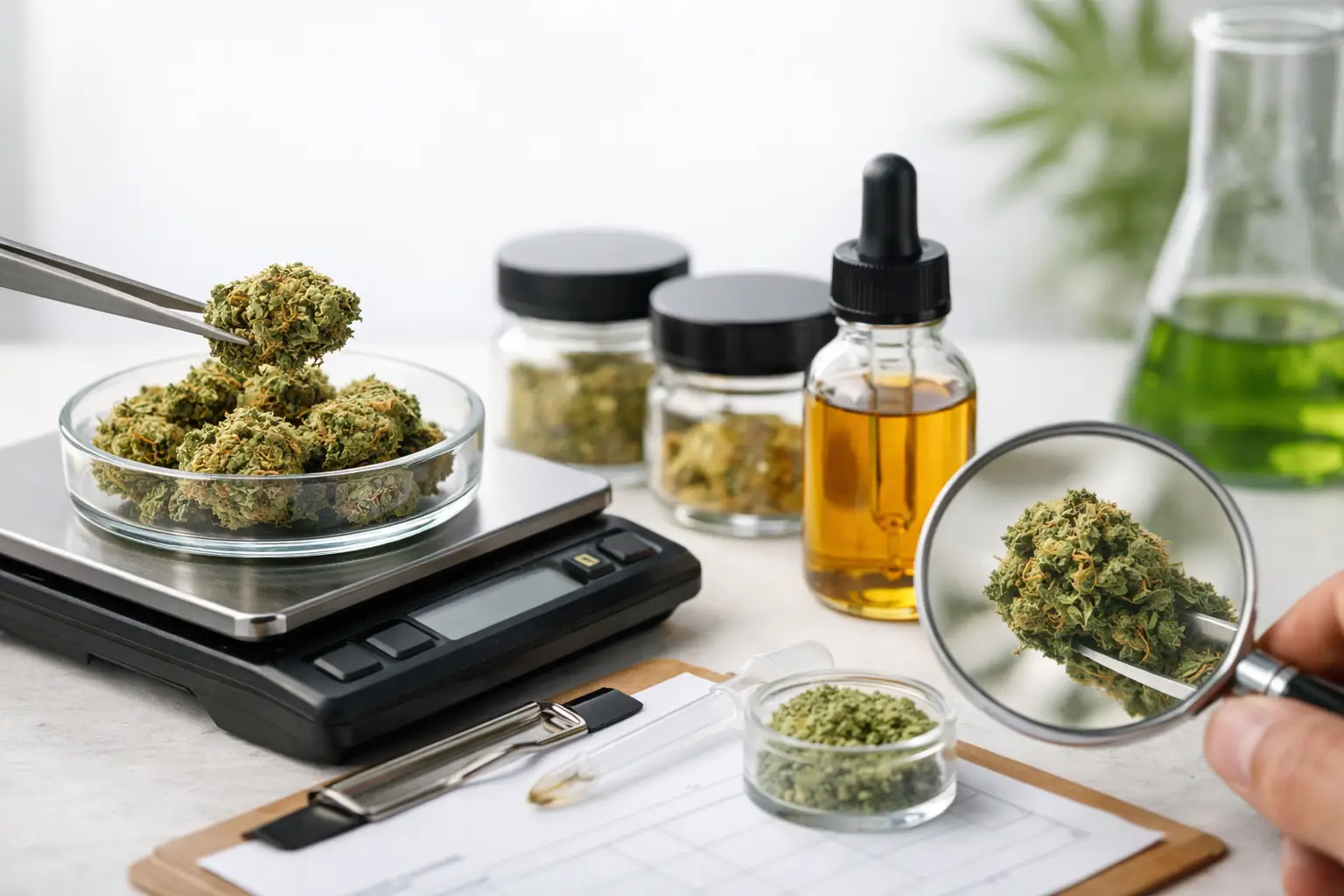
A 28% flower and a 10 mg edible do not belong in a simple stronger-versus-weaker comparison. They are different formats, measured differently, and experienced on different timelines. Knowing how to compare cannabis potency means looking past the biggest number on the package and matching the product to your own familiarity, plans, and preferred experience.
For adult consumers 19+, the label is the best place to start. It gives you a regulated product’s cannabinoid information, package size, and format. A little label math can make shopping faster and help prevent a purchase that is much stronger, or milder, than you intended.
Start With the Potency Measurement
Cannabis potency usually refers to the concentration or amount of cannabinoids, especially THC. THC is the main intoxicating cannabinoid. CBD is non-intoxicating and may be listed alongside THC, but a high-CBD product should not be treated as interchangeable with a high-THC product.
The key is that different categories use different measurements. Flower and many pre-rolls commonly show THC as a percentage. Edibles and beverages generally show milligrams, often both per serving and per package. Vapes, oils, and concentrates may show a percentage, milligrams, or both.
A percentage tells you how much of a product’s weight is THC. Milligrams tell you the total amount of a cannabinoid in a defined quantity. Neither number is automatically more useful. The useful number is the one that lets you compare like with like.
How to Compare Cannabis Potency by Format
Flower and pre-rolls
For dried flower, THC percentage is the familiar starting point. A 20% THC flower contains roughly 200 milligrams of THC per gram of flower. A 28% THC flower contains roughly 280 milligrams per gram. If both products are similar in freshness, storage, and cultivar, the 28% option has more THC by weight.
Package size changes the total amount. A 3.5-gram package at 25% THC contains approximately 875 milligrams of THC in total: 3.5 grams multiplied by 1,000 milligrams, then multiplied by 25%. That is not the amount your body will necessarily absorb, and it does not tell you how much is used in one session. It is simply a clean way to compare the THC available across packages.
Pre-rolls need the same two-part check: THC percentage and the weight of each pre-roll. A 0.5-gram pre-roll at 24% THC contains less total THC than a 1-gram pre-roll at the same percentage. Multipacks can be especially easy to misread, so check whether the stated weight is per pre-roll or for the entire pack.
Edibles and beverages
With edibles, milligrams per serving matter more than the overall package total. A package containing 10 mg of THC might have one 10 mg gummy or four 2.5 mg gummies. The total is the same, but the serving control is very different.
This is one reason edibles deserve extra patience. Effects can take longer to appear than inhaled products and can last longer as well. A product’s 10 mg total THC does not compare directly with 10 mg of THC calculated from flower. The route of consumption changes the timing and the way the body processes THC.
Look for both "THC per serving" and "THC per package." If you want more control, smaller clearly marked servings may be a better fit than a single higher-dose item. Avoid taking more just because effects have not arrived quickly.
Vapes, oils, and concentrates
Vape cartridges and concentrates often have high THC percentages, sometimes far above flower. A 1-gram vape at 80% THC contains about 800 mg of THC in the cartridge. That is a total-content comparison, not a reason to treat an 80% vape as exactly three times as intense as 26% flower in every use.
How much is consumed at once, device temperature, inhalation style, and personal tolerance all affect the experience. Concentrates are generally best approached with more care than flower, particularly by people who are new to cannabis or returning after time away.
Oils may list milligrams per milliliter, total milligrams per bottle, and milligrams per measured dose. Check the included dropper or dosing information instead of assuming one full dropper equals one serving. A 30 mL bottle with 900 mg of THC, for example, works out to 30 mg per mL, but the suggested measured amount may be smaller.
Read THC Ranges Without Treating Them as Guarantees
Legal cannabis labels may display a range rather than one fixed THC percentage. This reflects product testing and batch variation. If a flower product is labeled 22% to 28% THC, compare it as a product likely to fall within that range, not as a guaranteed 28% product every time.
Freshness also matters. A well-stored product may provide a better experience than an older, poorly stored product with a headline THC number that looks higher. For flower, check the packaging date where available and store it sealed, away from heat and direct light.
A higher THC number also does not guarantee a better product. Aroma, flavor, moisture, terpene profile, and your own response all matter. Two products with the same THC level can feel different, and effects can vary from one person to another.
Compare Total THC and Your Actual Serving
The most practical question is not "Which package has the most THC?" It is "How much THC am I likely to use at one time?" This keeps the comparison grounded in real use rather than package marketing.
For flower, the answer depends on how much you plan to consume. For an edible, it is the labeled serving. For a vape, it can be harder to measure precisely, which is why short, spaced-out use is a sensible approach. For oil, it is the measured dose indicated on the product.
If you are comparing products for value, use the total THC in the package after you have decided that the format and serving size work for you. A lower-priced product is not necessarily better value if it is not a format you enjoy or if its portions make it hard to use comfortably. Similarly, paying more for a lower-THC product can make sense when you want a balanced THC-to-CBD profile or a manageable serving size.
Keep CBD and Other Cannabinoids in the Picture
THC gets most of the attention, but CBD can change what a product offers. Some customers prefer a balanced product with both THC and CBD rather than THC alone. A label such as 10 mg THC and 10 mg CBD per serving is different from a 10 mg THC product with no meaningful CBD content.
CBG, CBN, and other minor cannabinoids may appear on labels as well. Their presence can be useful information, but do not let a long cannabinoid list replace the basics. Confirm the THC amount, serving size, format, and intended use first.
Terpenes may also be listed, especially on flower, vapes, and concentrates. They contribute to aroma and flavor, and some shoppers use them to narrow options. They should not be viewed as a guaranteed prediction of effects or as a substitute for checking potency.
A Quick Label Check Before Checkout
Before choosing between two products, compare four things: the format, THC per serving or per gram, total THC in the package, and the THC-to-CBD balance. Then consider whether the product fits your schedule. An edible may not suit a short evening window, while a vape may not offer the same portion precision as a clearly divided edible.
If the label is unclear, ask a store team member to explain the package information. The goal is not to chase the highest THC available. It is to leave with a legal product whose format and potency make sense for the experience you want. Start with the label, keep your serving in mind, and give yourself room to learn what works for you.


