
August 30, 2026
How to Read Cannabis Labels Before You Buy
Learn to read cannabis labels with confidence: THC, CBD, terpene profiles, package dates, formats, and safety details that help you choose better.
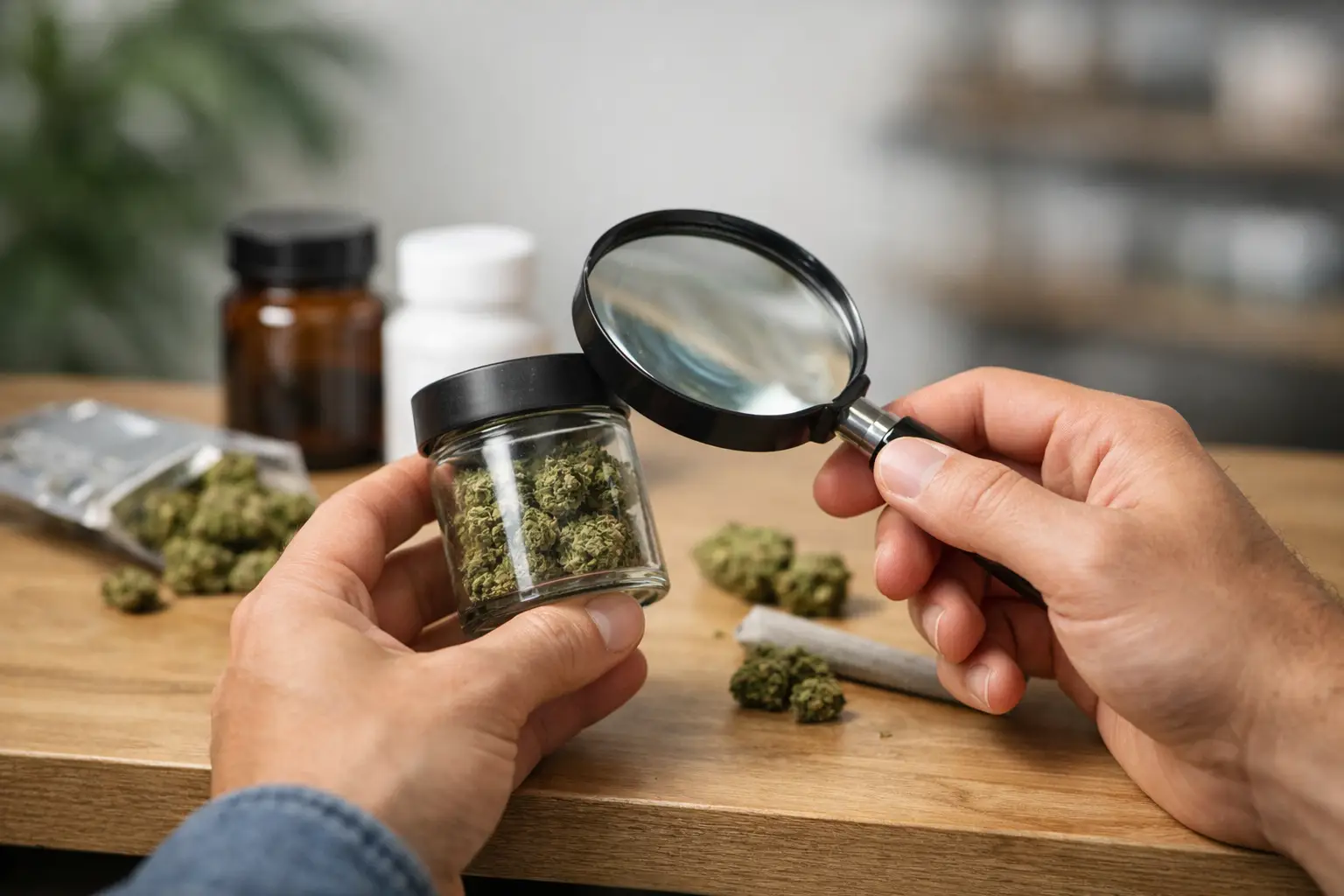
A cannabis package can look like a wall of tiny print when you are standing at the counter or building a delivery order. Learning to read cannabis labels turns that information into a quicker way to choose a product that fits your plans, tolerance, and preferred format.
The name on the front matters less than the details on the back. A product marketed with a familiar strain name may still differ from another version with the same name. THC levels, terpene content, freshness, format, and dose all affect what you are buying. Here is what to look for before it goes in your basket.
How to Read Cannabis Labels in the Right Order
Start with the product format. Flower, pre-rolls, vapes, concentrates, edibles, beverages, oils, capsules, and topicals are used differently and can feel different because of how quickly they take effect and how long they last. A high-THC pre-roll is not directly comparable to a 10 mg edible, even if both are described as strong.
Once you know the format, work through the label in this order: cannabinoid content, serving or activation size, terpene information, package date, and safety details. That order helps you avoid a common mistake: choosing only by the largest THC number on the package.
Check THC first, but read the unit
THC is the primary intoxicating cannabinoid in cannabis. On regulated products, it may be shown as a percentage, milligrams per gram, milligrams per package, or milligrams per serving. The unit matters as much as the number.
For dried flower and pre-rolls, THC is usually listed as a percentage or milligrams per gram. A flower product at 20% THC contains roughly 200 mg of THC per gram. That does not mean every session delivers 200 mg. Your actual intake depends on how much you consume, the way you consume it, and your own tolerance.
For edibles and beverages, look for milligrams of THC per piece, serving, or container. A package may contain multiple pieces, so do not assume the total package number applies to one gummy or one square. In Canada, legal edible cannabis products are limited to 10 mg of THC per package, but the package may divide that amount into several smaller servings.
Vape cartridges and concentrates can display total THC in milligrams and a percentage. These products are concentrated, so small amounts can go a long way. If you are new to a vape or concentrate, a lower-potency option or a very small first inhale is usually the more practical call.
THC ranges are common for flower because cannabis is a natural product. If a label lists a range, expect the product to fall somewhere within it rather than at one fixed number. A difference of a few percentage points is not always more meaningful than freshness, terpene profile, or how your body responds to the product.
Look at CBD for balance and purpose
CBD does not create the same intoxicating effects as THC, but it can change how a THC product feels for some people. Labels may list CBD as a percentage, milligrams per gram, or milligrams per serving, just as they do for THC.
A product with meaningful CBD alongside THC may be a better fit for someone who wants a more measured experience than a high-THC-only product. A CBD-dominant product may suit customers who do not want intoxication, while a balanced THC:CBD product offers another middle-ground option. There is no universally best ratio. The right choice depends on your experience level, goals, and how much THC you are comfortable with.
Do not confuse CBD with a guarantee that a product will feel mild. Check the actual THC amount, especially with edibles, oils, and capsules where dosing is more precise.
Treat terpene information as a useful clue
Terpenes are aromatic compounds that contribute to a product's smell and flavor. They are often listed as a percentage or by individual names, such as myrcene, limonene, caryophyllene, pinene, or linalool.
Terpene details can help you shop beyond a strain name. For example, a citrus-forward limonene profile may appeal to someone who enjoys bright, fresh flavors, while a product higher in myrcene may have a more earthy aroma. These descriptions are useful for comparing products, but they are not a reliable promise of a specific effect.
Terms like indica, sativa, and hybrid can be a starting point, but they are broad categories. Two products labeled the same way can have different THC levels, terpene profiles, and overall experiences. If you found a product you enjoyed, note its cannabinoid numbers and terpene profile. Those details are more useful when looking for a similar option later.
Why the Package Date Matters
Cannabis does not have to be old to be disappointing. Dried flower can lose aroma and flavor over time, while improperly stored products may become dry or harsh. The packaging date tells you when the product was sealed, which gives you a clearer sense of freshness than a strain name or eye-catching package design.
For flower and pre-rolls, many customers prefer a more recent package date, particularly when aroma and flavor are priorities. That said, a newer date is not the only consideration. Properly packaged flower may still be a solid choice, while a recent package with a profile you do not enjoy is not automatically the better buy.
The lot number is another useful detail. It identifies the specific production batch and supports product tracking. You will likely never need it, but keep it available if there is a product quality issue or a recall notice.
Read the Fine Print on Dosing and Ingredients
Edibles, beverages, oils, capsules, and topicals require extra attention because the label may include multiple measurements. Look for the amount per serving and the total amount in the package. A beverage may be one serving, while a multipiece edible may not be.
With ingestible products, effects can take longer to appear than with inhaled cannabis. Taking more before the first dose has had time to work is one of the most common ways people end up having a stronger experience than planned. Start with a low amount, particularly if you are new to edibles, and give it time.
Ingredient lists matter for more than flavor. Check for food allergens, sweeteners, gelatin, caffeine, and other ingredients that may affect your choice. Vegan customers, people with dietary restrictions, and anyone avoiding certain ingredients should read this section before purchasing, not after opening the package.
For oils and capsules, also check the carrier oil and the included measuring device, if there is one. A dropper marked in milliliters is only helpful when you know how many milligrams of cannabinoids are in each milliliter.
Understand Required Symbols and Warnings
Legal cannabis packaging includes health warnings, a standardized cannabis symbol, child-resistant features, and an excise stamp. These are not marketing details. They indicate that the product is part of the regulated market and has passed through the required supply chain.
The warning text may feel repetitive, but it covers practical concerns: keep cannabis away from children and pets, do not drive after using it, and use extra caution when trying an unfamiliar product. Cannabis should also remain in its original packaging when stored at home. The package protects the product and keeps key details available when you need them.
If a package appears damaged, missing required information, or has a broken seal, do not treat it as a minor issue. Ask the store team before purchasing. Regulated retail should make it easy to identify what you are getting.
Use Labels to Compare Products, Not Chase a Number
When choosing between two products, compare like with like. Put two flower products side by side, or compare two 10 mg beverages, rather than trying to rank every format on one THC scale. Consider the cannabinoid amount, terpene profile, package date, serving size, and price together.
A 28% THC flower product is not automatically better than one at 22%. The higher-potency option may be right for an experienced consumer seeking that profile, but it may be more than another customer wants. Likewise, a lower-THC product with a terpene profile you enjoy may become the one you reach for more often.
Labels are also useful after the purchase. If a product worked well for you, take a photo of the cannabinoid panel and terpene information before recycling the package. The next time you shop at Golden Tree Cannabis, you will have practical details to share instead of trying to remember only the package color or product name.
The best label readers are not looking for the strongest product every time. They are looking for the clearest match: the right format, a dose they can manage, flavors they enjoy, and details that make the purchase feel predictable. That small pause at the label can make every future choice easier.


